New Border Policy Imposes $5000 Apprehension Fee on Migrants: Legal Challenges Mount
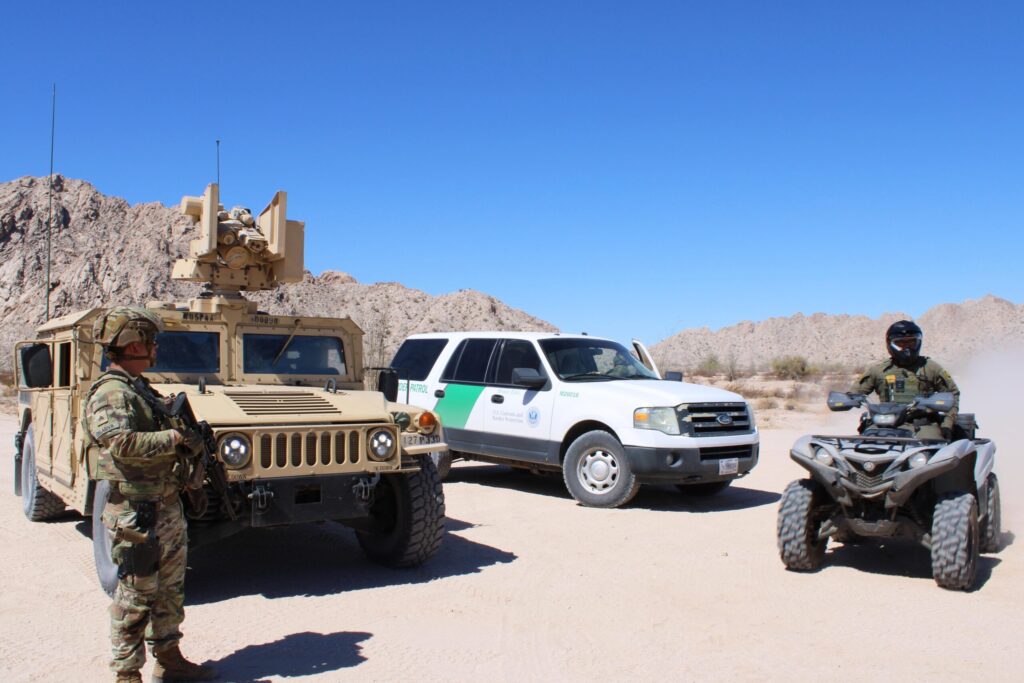
U.S. Army Sgt. Arnold De la Riva with 127th Military Police Company, 759th Military Police Battalion, 89th Military Police Brigade, assigned to Joint Task Force-Southern Border (JTF-SB), talks to a U.S. Border Patrol agent before executing a joint dismounted patrol in Wellton, Ariz., Aug. 1, 2025. Dismounted patrols enable Soldiers and agents to detect signs of life and suspicious patterns in austere environments, directly supporting border security operations by enhancing situational awareness and threat detection. JTF-SB executes full-scale, agile, and all-domain operations in support of U.S. Customs and Border Protection to protect the territorial integrity of the United States and achieve 100% operational control of the southern border. (U.S. Army photo by 2nd Lt. Erica Esterly)
New Border Policy Imposes $5000 Apprehension Fee on Migrants: Legal Challenges Mount
Overview of the New Enforcement Measure
The U.S. Border Patrol has begun enforcing a new $5,000 “apprehension fee” on individuals aged 14 and older who are caught entering the United States illegally. The policy is part of the broader enforcement framework created under the One Big Beautiful Bill Act (OBBBA), signed by President Donald Trump.
Under the new rules, anyone arrested after crossing the border without authorization—and deemed inadmissible—must pay the fee at the time of arrest. The charge applies regardless of how long an individual has already been in the country or where the apprehension occurs. This new civil penalty is in addition to existing criminal and immigration consequences.
The New Border Policy Imposes $5000 Apprehension Fee on Migrants has sparked significant discussions and debates surrounding immigration enforcement.
The administration has confirmed that the fee is active nationwide, though it is already the center of multiple lawsuits.
Details of the $5,000 Apprehension Fee
Who Must Pay
The penalty applies to migrants 14 years of age or older who are arrested for entering the U.S. without authorization.
When It Is Imposed
The fine is levied immediately at the time of arrest, without a waiting period, prior adjudication, or formal hearing.
Additional Penalties
This measure joins other new punitive tools, including:
A daily fine of nearly $1,000 for individuals who defy deportation orders
Incentives for voluntary departure, often described as “self-deportation”
Elimination of fee waivers for many immigration applications
If the apprehension fee remains unpaid, it becomes a long-term debt to the U.S. government, potentially blocking future legal entry or immigration benefits.
Mounting Legal and Humanitarian Concerns
Advocacy groups, immigration lawyers, and policy experts have described the new fee as “coercive,” “punitive,” and legally questionable. Several challenges are now moving through the courts.
Due Process Challenges
Critics argue the fee violates constitutional protections by penalizing migrants before they have received a hearing or had an opportunity to present an asylum claim.
Concerns include:
Immediate enforcement without a court decision
No 30-day notice period
Application to individuals who may have lived in the U.S. for extended periods
No waiver available even for those in severe financial hardship
Legal experts argue that tying immigration access to the ability to pay imposes a barrier that may violate due process rights.
Impact on Asylum Seekers and Humanitarian Protections
Groups such as the National Immigration Law Center (NILC), Kids in Need of Defense (KIND), and Global Refuge say the fee creates a “financial wall” that effectively blocks access to asylum.
Key concerns include:
Asylum seekers typically arrive with no money or belongings
International law requires nations to provide asylum access without cost barriers
The fee may violate both U.S. asylum statutes and global humanitarian obligations
Advocates warn the policy could deter individuals fleeing persecution, violence, and trafficking from seeking lawful protection.
Effects on Minors and Vulnerable Populations
Because the fee applies to children as young as 14, child-advocacy organizations argue the measure causes disproportionate harm. Many minors arrive unaccompanied and lack any financial means.
Members of Congress have introduced proposals to exempt minors from the fee, though no exemption exists under current law. Critics also warn that financial pressures could increase vulnerability to traffickers and smugglers.
Practical Concerns and Enforcement Issues
Opponents question the feasibility of collecting thousands of dollars from individuals who typically lack:
Assets, Legal employment, Banking access, & Support systems
Because most migrants cannot realistically pay the fee, critics argue it functions less as a revenue tool and more as a permanent punitive measure designed to bar future legal entry.
Legal Challenges to the OBBBA Framework
Several lines of potential litigation are emerging.
1. Constitutional Due Process Claims
Lawsuits may argue the fee is unconstitutional because it penalizes individuals before adjudication and imposes financial barriers to legal redress.
2. Violations of Asylum Law
Advocates argue the fee undermines the legal right to seek asylum—long considered a no-cost process under domestic and international law.
3. Administrative Procedure Act (APA) Issues
While the OBBBA provides statutory authority, lawsuits may challenge whether DHS implemented the fee properly or exceeded its allowable discretion.
4. “Byrd Rule” Legislative Concerns
During Senate debate, portions of the fee structure were challenged as violating the Byrd Rule, which governs what can be included in reconciliation bills. Although the bill ultimately passed, legal experts note these concerns are likely to reappear in court.
A Policy Heading Toward the Courts
Multiple organizations are already filing lawsuits targeting various elements of the OBBBA, with the apprehension fee expected to become a major legal flashpoint. Critics maintain the measure violates constitutional protections, humanitarian principles, and the practical realities of migration.
For now, the administration insists the $5,000 apprehension fee is fully in effect nationwide.