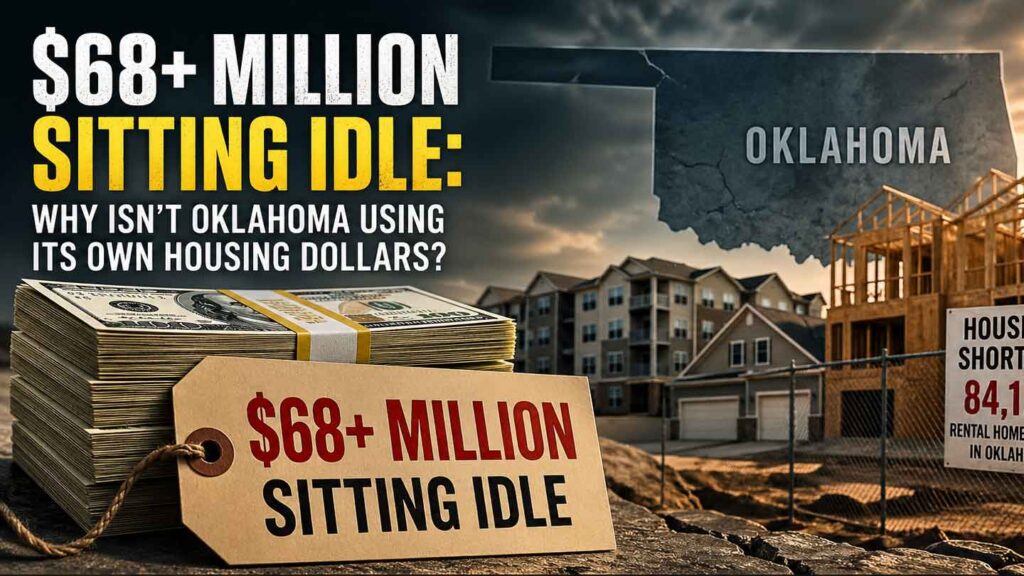
$68+ Million Sitting Idle – Why Isn’t Oklahoma Using Its Own Housing Dollars?
oklahoma-homes.jpg
$68+ Million Sitting Idle: Why Isn’t Oklahoma Using Its Own Housing Dollars?
Oklahoma’s Unused Housing Funds Raise Questions
At a time when housing needs across Oklahoma remain pressing, one figure stands out: according to the Oklahoma Housing Finance Agency (OHFA) 2025 Audit, OHFA has reported approximately $68.1 million in unreserved funds on its balance sheet. For many taxpayers and stakeholders, the natural question is a simple one—what role should those dollars be playing right now?
This is a question of stewardship. In a state where housing shortages affect both urban and rural communities, understanding how available resources are—or are not—being used is a reasonable place to start. A figure that may add perspective is the 84,125 rental homes short the state of Oklahoma is according to the National Low Income Housing Coalition.
What Are These Funds and Why They Matter
Unreserved funds are, simply put, dollars that aren’t currently committed to anything. They’re not tied to a project or restricted for a specific use—which means they can be
used where they’re needed most. These aren’t just numbers on paper. They represent real money that could help build new housing, support projects that are stuck, or make deals financially possible.
In housing, funding gaps are common. Rising construction costs, interest rates, and limits on rent often leave projects short. Flexible funding like this can be the difference
between a project moving forward or not happening at all. When that money sits unused, there’s a real cost. Fewer homes get built, fewer projects move forward, and communities miss out.
So the question becomes simple: with housing needs still growing, why aren’t these funds being put to use?
How Other States Are Deploying Housing Reserves
Across the country, state housing finance agencies frequently use balance sheet resources as a tool to keep housing production moving, especially during periods of uncertainty.
While approaches vary, common strategies include gap financing through revolving loan funds, allowing agencies to recycle capital across multiple projects over time, credit
enhancements, which reduce risk for private lenders and help unlock additional investment, targeted rural set-asides, recognizing that smaller markets often face
greater financing challenges, and bridge or backstop funding for developments using federal programs such as the Low-Income Housing Tax Credit (LIHTC), particularly
when market conditions shift. The unifying theme is flexibility. Rather than remaining static, these funds are often used to respond to real-time conditions in the housing market.
In many states, this kind of deployment is not viewed as extraordinary—it is part of standard practice to ensure that projects continue moving forward even when external
factors create uncertainty. The Housing Solutions Lab has issued research around this issue. The North Dakota Legislature establish the Rural Housing Investment Incentive
Pilot Program. Wisconsin’s Housing Finance Agency develops “Dividends for Wisconsin” which outlines how surplus funds from the previous fiscal year will be
allocated. This raises a natural comparison: why doesn’t Oklahoma utilize unrestricted reserves to promote more housing?
The Potential Impact of $68 Million
While exact outcomes would depend on how funds are structured and deployed, the scale of $68 million invites practical consideration. For example, such funds could potentially support hundreds of housing units by filling financing gaps in developments that are otherwise ready to proceed, stabilize projects affected by disruptions, including those tied to changes or pauses in programs like HOME, target rural communities, where smaller deals often struggle to secure sufficient capital, and leverage additional private investment, multiplying the impact of each public
dollar.
Even modest per-project contributions can unlock significantly larger developments. In that sense, the question is not just how much $68 million represents on its own, but how
much total housing activity it could enable. For communities facing limited housing supply, those possibilities are not theoretical—they translate directly into homes that could be built, preserved, or made more affordable.
Connecting Back to the Bigger Picture
This question does not exist in isolation. The existence of significant unused capital adds another dimension: while some
projects face barriers, resources remain available but unallocated. That dynamic suggests an opportunity—not necessarily a problem, but a point of
alignment that has yet to be fully realized.
Looking ahead, these funds could also be part of the solution. Whether through immediate, targeted deployment, transparent strategy for future use, or direction from agency leadership, the governing board, or state policymakers, there are multiple pathways to connect available resources with current needs.
The Question Moving Forward
At its core, this issue comes down to stewardship. Oklahoma has resources. It has identified housing needs. And our Legislature, Governor and the Oklahoma Housing Finance can work together to design a program to bridge the gap.
For taxpayers and communities alike, one question remains: If significant housing dollars are available while projects are stalled and needs persist,
who is responsible for deciding when—and how—to put those resources to work? Given the scope of these questions, the Legislature may also want to consider an interim study to take a closer, independent look at how housing funds are being managed, when they are deployed, and whether current processes are meeting both statutory requirements and real-world housing needs.
#OklahomaHousing #AffordableHousing #HousingCrisis #OHFA #PublicFunds #RealEstatePolicy #HousingDevelopment #OklahomaNews #CommunityGrowth #EconomicDevelopment
The Oklahoma Gun Laws That Most Residents Will Get Wrong in 2026