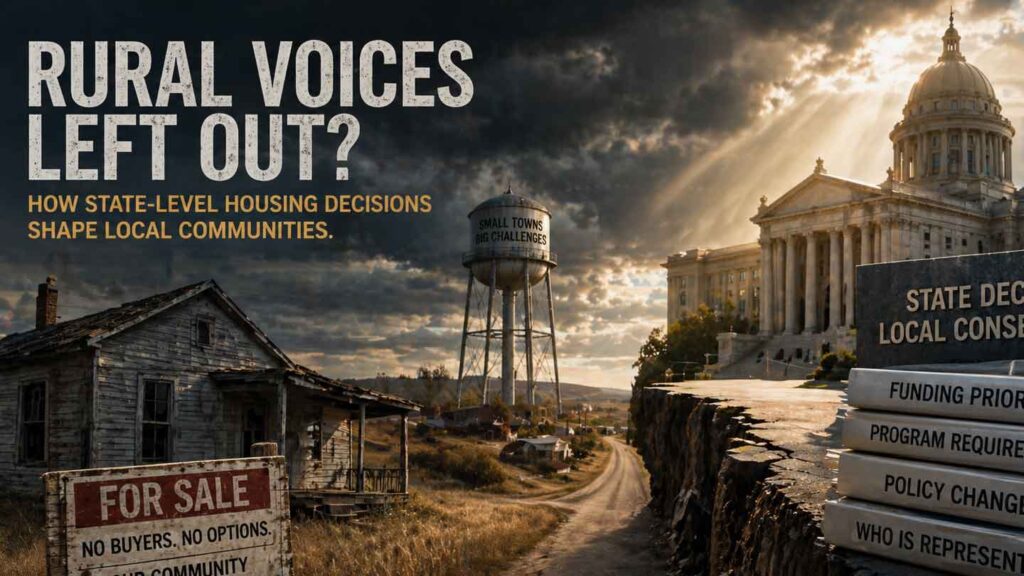
Rural Voices Left Out? How State-Level Housing Decisions Shape Local Communities
rural-voices.jpg
Rural Voices Left Out? How State-Level Housing Decisions Shape Local Communities
Introduction: State Housing Decisions and Rural Impact
Across Oklahoma, housing policy is often discussed in terms of funding, regulations, and program design. But for many rural communities, a more fundamental question is emerging: who has a seat at the table when those decisions are made?
As the Oklahoma Housing Finance Agency (OHFA) shapes housing programs and funding priorities, their decisions carry real consequences for small towns and rural areas—places where development challenges, economic conditions, and housing needs can differ significantly from those in urban centers.
The Distance Between Policy and Place
Centralized Decision-Making in Housing Policy
Housing policy in Oklahoma is largely centralized, with key decisions made at the state level. From allocation of federal funds to program rules and application processes, these choices often originate far from the communities they ultimately affect. For rural areas, this can create a disconnect. Local leaders and developers may find themselves navigating policies that were designed without direct input from the communities they serve.
This raises an important question: how are rural perspectives incorporated into statewide housing decisions, and are existing structures sufficient to ensure those voices are heard?
Representation Matters
Governance and Decision-Making Structures
Rural Housing Realities
One lens through which to view this issue is governance. The composition of decision- making bodies, including boards and advisory groups, can influence not only what decisions are made, but how they are made. If representation from rural areas is limited, it may affect the range of perspectives considered during policy development. Similarly, broader questions about representation, such as gender diversity and inclusion of people of color, can shape how equitably housing needs are understood across different communities.
This is not simply a question of demographics, but of lived experience. Rural housing challenges often include limited access to development capital, smaller project sizes that are harder to finance, infrastructure constraints, and unique workforce and population trends.
A review of OHFA’s Board of Trustees shows no representation from rural communities, as well as a lack of gender and racial diversity. While board members bring valuable expertise, the absence of these perspectives may limit how fully the needs of all Oklahomans are considered—especially those in rural areas. This raises a broader policy question for state leadership: whether the current structure adequately reflects the communities the agency serves, or if adjustments by the Legislature and Governor could help ensure a more balanced, representative, and inclusive decision-making body moving forward. Without direct representation, these factors may be underweighted in policy discussions.
When State Decisions Hit Local Ground
Local Impacts of State Funding Changes
The impact of state-level decisions becomes most visible at the local level. Changes in funding structures, program requirements, or application processes can
determine whether a housing project moves forward—or stalls. For rural communities, where fewer projects are proposed to begin with, even small policy shifts can have outsized effects.
These perspectives highlight a broader concern: policies intended to operate statewide may not always translate evenly across different regions. A Question of Accountability
Feedback Loops and Public Trust
Another layer of the issue is accountability. When decisions are made at the state level, what mechanisms exist for local communities to provide feedback—or to challenge
decisions that may not align with their needs? If rural stakeholders feel that their concerns are not being heard, it can erode trust in the system and discourage participation in state programs altogether. This raises a broader question: are there sufficient channels for two-way communication between OHFA and the communities they serve?
Bridging the Gap
Improving Inclusion and Engagement
Addressing these concerns does not necessarily require a complete restructuring of existing systems. However, it may call for a renewed focus on inclusion and engagement. Potential approaches could include expanding representation from rural communities on the OHFA Board of Trustees, creating formal channels for local input on major policy decisions, or conducting targeted outreach to ensure rural stakeholders are aware of—and able to participate in—public processes.
The goal would be to ensure that statewide housing policy reflects the diversity of Oklahoma’s communities, rather than a one-size-fits-all approach.
Looking Ahead
Future of Rural Housing Policy
As housing challenges continue to evolve, the importance of inclusive decision-making is likely to grow. Rural communities face unique pressures that require tailored solutions
and thoughtful policy design. The question moving forward is not simply how housing programs are structured, but how decisions about those programs are made—and who is involved in making them.
For many across Oklahoma, ensuring that rural voices are part of that conversation may be key to building a more responsive and equitable housing system.