DSA Leaders Reaffirm Controversial Policy Platform as Progressive Agenda Faces Renewed Scrutiny
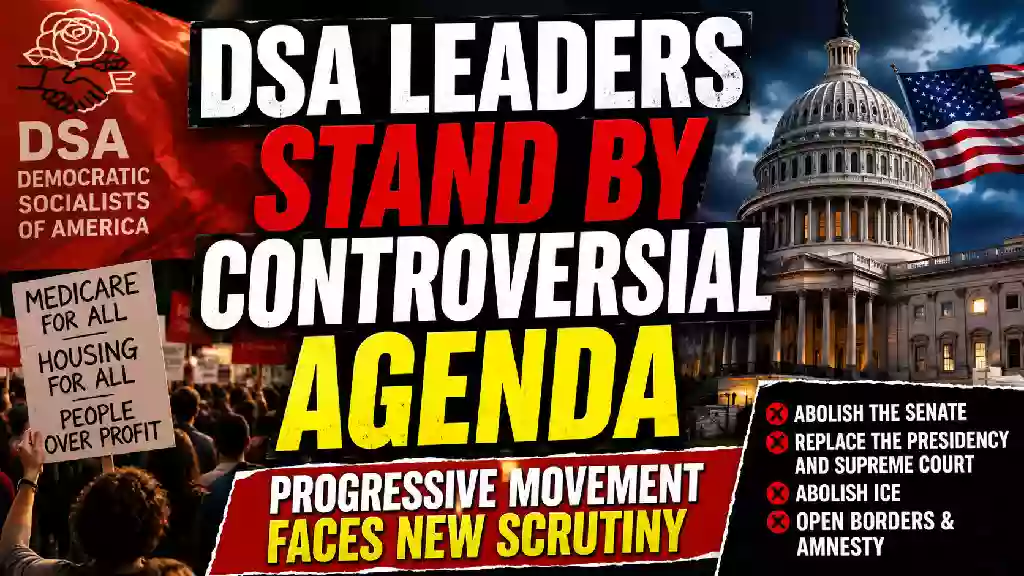
A political news thumbnail illustrating the renewed debate surrounding the Democratic Socialists of America (DSA), featuring the U.S. Capitol and imagery representing progressive activism as discussions over the organization's policy platform continue ahead of the 2026 election cycle.
DSA Leaders Reaffirm Controversial Policy Platform as Progressive Agenda Faces Renewed Scrutiny
Democratic Socialists Spark Fresh Debate After Defending Sweeping Policy Agenda Ahead of Key Elections
As the 2026 election cycle accelerates, the national conversation surrounding progressive politics has intensified after leaders affiliated with the Democratic Socialists of America (DSA) publicly reaffirmed a series of sweeping policy proposals during a televised interview. The exchange has reignited debate over the role of democratic socialism within the broader Democratic Party and whether more progressive candidates can succeed in politically competitive states.
Televised Interview Revives Debate Over DSA Priorities
The discussion gained widespread attention after a DSA co-chair was asked to respond to several long-standing positions associated with the organization’s platform. During the interview, the official affirmed support for proposals that included abolishing the U.S. Senate, replacing the presidency and Supreme Court in their current forms, eliminating Immigration and Customs Enforcement (ICE), and pursuing the long-term goal of removing national borders while offering amnesty to undocumented immigrants currently living in the United States.
The straightforward responses quickly became a focal point of political discussion online, drawing praise from some progressive activists while prompting criticism from conservative commentators who argued the platform represents a significant restructuring of American government.
Critics Warn of Expanding Progressive Influence
National Review columnist Caroline Downey argued during the discussion that many progressive candidates emphasize popular issues such as expanding social programs while receiving support from organizations whose broader political goals are less frequently discussed during campaigns.
Downey contended that proposals involving expanded government healthcare or increased social spending often receive greater public attention than structural reforms affecting federal institutions. She suggested the interview reflected a willingness among some democratic socialist activists to openly embrace ideas that were once considered politically fringe.
Michigan Race Draws National Interest
The conversation shifted to Michigan’s gubernatorial race, where progressive candidate Abdul El-Sayed has attracted national attention following an endorsement from Representative Alexandria Ocasio-Cortez.
According to the discussion, El-Sayed has stated that he is not a member of the Democratic Socialists of America. However, commentators argued that support from progressive organizations and activists has placed his campaign under increased scrutiny as Democrats compete in one of the nation’s most closely watched battleground states.
Political observers featured in the interview questioned whether a candidate with strongly progressive policy positions could successfully appeal to moderate and independent voters who often determine election outcomes in competitive states like Michigan.
Online Activism Plays a Larger Political Role
Another major topic involved the growing influence of online political personalities within progressive campaigns.
The discussion referenced appearances by left-wing commentator Hasan Piker at campaign events, with critics arguing that internet-based activist communities are playing a larger role in shaping messaging, fundraising, and voter engagement. Supporters view these digital platforms as an effective way to mobilize younger voters, while opponents argue they amplify more ideologically driven positions.
Future Direction of the Democratic Party
The interview also explored what these developments may signal for the Democratic Party’s future.
Commentators suggested that endorsements from prominent progressive lawmakers could indicate increasing confidence among left-wing activists seeking to expand their influence beyond traditionally liberal cities and into politically divided states. Whether that strategy succeeds remains uncertain as candidates attempt to balance support from progressive voters with the broader electorate.
With major elections approaching, races in states such as Michigan are expected to provide important clues about how voters respond to candidates aligned with progressive policy agendas.
Campaigns Enter a Critical Phase
As campaigns intensify in the months ahead, debates over immigration, healthcare, government reform, and the balance between progressive and moderate priorities are likely to remain central issues.
The televised interview has added fresh attention to the policy positions associated with democratic socialist organizations while highlighting the broader ideological debate taking place within the Democratic Party. Ultimately, voters will decide whether these ideas gain wider acceptance at the ballot box during the upcoming election cycle.
#America #Congress #USGovernment #Democrats #Republicans #Socialism #ElectionNews #GovernmentReform #BorderSecurity #Campaign2026