House-Senate Clash Over DHS Funding Sparks Heated Debate in Washington
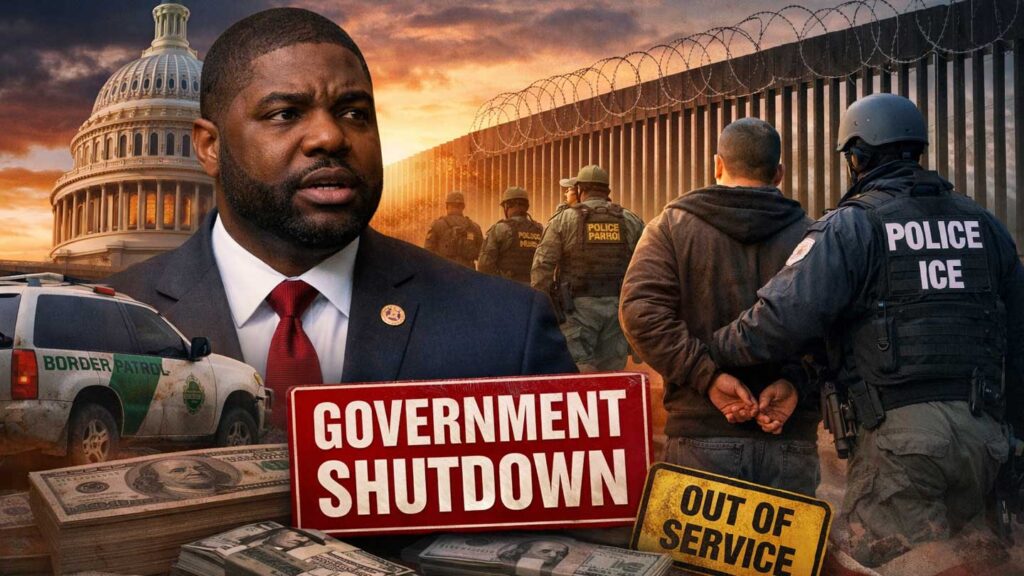
Donalds called for the elimination of the Senate filibuster
House-Senate Clash Over DHS Funding Sparks Heated Debate in Washington
A growing political battle over funding for the Department of Homeland Security (DHS) is intensifying tensions in Washington, as lawmakers clash over immigration enforcement, government spending, and the future of federal agencies responsible for border security.
In a recent television interview, Florida Congressman Byron Donalds delivered sharp criticism of Senate Democrats and leadership decisions in the upper chamber, calling a Senate-backed funding proposal a “piece of hot garbage” and accusing lawmakers of failing to support critical national security operations.
A Breakdown in Washington
At the center of the dispute is a stalled funding bill that would impact agencies such as Immigration and Customs Enforcement (ICE), Border Patrol, and other DHS divisions. According to Donalds, the House of Representatives had already taken steps to fully fund homeland security operations, but the Senate’s version of the bill fell short—particularly in areas tied to immigration enforcement.
Instead of accepting the Senate proposal, House Republicans rejected it and passed a short-term funding extension designed to keep DHS operating for an additional 60 days while negotiations continue.
Donalds placed much of the blame on Senate Democrats, arguing they are unwilling to support enforcement measures tied to immigration policy. He claimed that critical programs—including efforts to locate missing migrant children—were left unfunded in the Senate proposal.
Impact on Federal Workers
One of the most pressing concerns raised during the interview was the financial impact on federal employees. As the funding dispute continues, thousands of workers—including border agents, Coast Guard members, customs officials, and support staff—face delayed or missed paychecks.
“People are being asked to work without pay,” Donalds emphasized, describing the situation as a “travesty” and warning that prolonged funding delays could weaken national security operations.
The issue has broader implications beyond Washington politics. With many Americans already living paycheck to paycheck, lawmakers acknowledged the strain placed on federal employees caught in the middle of political gridlock.
Donalds expressed support for reforms that would hold members of Congress accountable during shutdowns, including proposals that would suspend congressional pay if funding agreements are not reached.
Immigration Policy at the Core
The funding dispute is deeply tied to broader disagreements over immigration policy. Donalds accused Democrats of pushing for what he described as “open border” policies and attempting to limit ICE enforcement efforts.
He argued that the disagreement is not just about funding levels, but about the role of federal agencies in enforcing immigration laws. According to Donalds, Republicans are unwilling to accept conditions that would scale back enforcement or return to policies used under the previous administration.
“This is about securing the homeland,” he said, emphasizing that immigration enforcement should be treated as a nonpartisan issue rather than a political bargaining tool.
Calls to End the Filibuster
In one of the more controversial points of the discussion, Donalds called for the elimination of the Senate filibuster, arguing that it enables obstruction rather than compromise.
He suggested that removing the filibuster would allow Congress to pass funding bills more efficiently and avoid repeated shutdown threats. However, such a move would represent a major shift in Senate rules and is likely to face strong opposition from both parties.
Leadership Under Scrutiny
The interview also highlighted tensions within Republican leadership. While Donalds praised House Speaker Mike Johnson for rejecting the Senate proposal, he questioned decisions made in the Senate, including a late-night voice vote with limited participation.
He urged Senate leaders to take a stronger stance and push for a funding solution that aligns with House priorities, particularly on immigration enforcement.
Despite the criticism, Donalds maintained that a resolution is still possible—if lawmakers return to the negotiating table with a willingness to compromise on procedural issues rather than core enforcement policies.
What Happens Next?
With the House passing a 60-day extension, the focus now shifts back to the Senate. Lawmakers face increasing pressure to reach an agreement that ensures DHS operations continue without interruption.
The key question remains: what will change in the next 60 days?
Donalds suggested that negotiations could resume, but expressed skepticism about whether Democrats will shift their position. He indicated that Republicans are prepared to stand firm, even if it means prolonged negotiations.
A Broader Political Divide
Beyond the immediate funding dispute, the debate reflects deeper divisions in American politics. Donalds criticized Democratic leadership at both the federal and state levels, pointing to policies in states like California, New York, and Illinois as examples of broader ideological differences.
He argued that these divisions are contributing to population shifts and growing dissatisfaction among voters, particularly on issues related to public safety and immigration.
The Stakes Moving Forward
As Congress continues to debate DHS funding, the outcome will have significant implications—not only for federal workers and border security, but also for the broader political landscape heading into future elections.
For now, the situation remains unresolved, with both sides holding firm in a high-stakes standoff that underscores the challenges of governing in a deeply divided Washington.
Read More