New York Hits Pause on AI Data Centers as Energy and Water Demands Raise Environmental Concerns
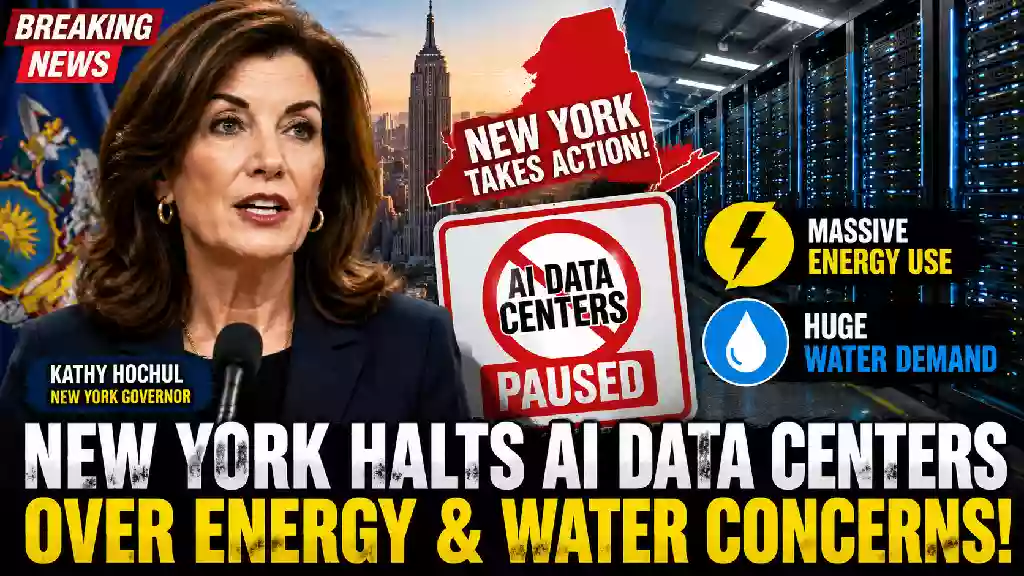
New York has become the first U.S. state to pause approvals for large AI data centers, citing rising concerns about electricity usage, water consumption, and the environmental impact of rapidly expanding artificial intelligence infrastructure.
New York Hits Pause on AI Data Centers as Energy and Water Demands Raise Environmental Concerns
State Becomes First in the US to Delay Large AI Data Center Approvals While Officials Review Environmental Impact
New York has become the first state in the nation to temporarily halt approvals for large artificial intelligence (AI) data centers, reflecting growing concerns over the enormous energy and water resources required to support the rapidly expanding AI industry. Governor Kathy Hochul signed a one-year executive order pausing environmental permits for major data center projects, allowing state agencies time to evaluate new regulations aimed at protecting the electrical grid, natural resources, and nearby communities.
The decision comes as AI technologies continue to reshape industries worldwide, driving demand for powerful computing infrastructure. While supporters argue that large data centers will create jobs and stimulate local economies, environmental experts warn that unchecked expansion could place unprecedented pressure on electricity supplies and water resources.
AI Boom Is Driving Record Electricity Consumption
Artificial intelligence relies on massive data centers filled with high-performance servers that operate around the clock. These facilities require vast amounts of electricity to process data, train AI models, and power cloud computing services.
According to figures discussed by sustainability experts, global data centers consumed approximately 460 terawatt-hours (TWh) of electricity in 2024. Projections indicate that demand could climb to nearly 1,000 TWh by 2030 and reach approximately 1,300 TWh by 2035, highlighting the rapid pace of AI-driven energy growth.
Within the United States, data centers currently account for roughly 4 to 5 percent of national electricity consumption. As AI adoption accelerates, experts believe that share could rise into the double digits, increasing pressure on power grids already facing rising demand from homes, businesses, and electric vehicles.
Water Use Emerges as Another Major Challenge
Electricity is only part of the environmental equation. AI data centers also require significant amounts of water to keep thousands of servers operating at safe temperatures.
However, sustainability experts note that cooling systems represent only part of AI’s overall water footprint. A substantial portion of water usage is tied to generating the electricity needed to operate these facilities.
A recent United Nations University estimate suggests that if current trends continue, AI’s global water footprint by 2030 could be comparable to the annual water needs of approximately 1.3 billion people in sub-Saharan Africa. In regions already experiencing water stress, including parts of the American Southwest, experts estimate that 70 to 75 percent of water associated with AI infrastructure is connected to electricity production rather than direct cooling.
Economic Growth Versus Environmental Protection
The temporary moratorium has sparked debate over how the United States should balance technological innovation with environmental responsibility.
President Donald Trump criticized New York’s decision, arguing that AI data centers represent one of the country’s strongest economic opportunities. He said the facilities have the potential to generate thousands of jobs while producing valuable tax revenue for local governments.
Supporters of the pause counter that reviewing environmental regulations now could help avoid future strain on public utilities and ensure that communities can accommodate AI-related development without compromising long-term sustainability.
Building a More Sustainable AI Future
Industry experts agree that artificial intelligence will remain a key driver of economic growth, but they also stress that infrastructure planning must evolve alongside technological progress.
Expanding renewable energy generation, modernizing electrical grids, improving data center efficiency, and developing advanced cooling technologies are expected to play an essential role in reducing AI’s environmental footprint.
New York’s decision marks an important milestone in the national conversation surrounding AI infrastructure. As governments and technology companies race to expand artificial intelligence capabilities, the challenge will be finding practical solutions that support innovation while protecting energy supplies, water resources, and the environment for future generations.
#ArtificialIntelligence #AI #DataCenters #TechnologyNews #Sustainability #Environment #Energy #WaterConservation #CloudComputing #RenewableEnergy