Young Archaeologists Unearth Ancient Egypt at Henryetta Public Library Summer Reading Program
Young Archaeologists Unearth Ancient Egypt at Henryetta Public Library Summer Reading Program
Young Archaeologists Unearth Ancient Egypt at Henryetta Public Library Summer Reading Program
Henryetta, Oklahoma — The sounds of eager young voices and the rustle of pages filled the Henryetta Public Library on a recent summer day as children transformed into budding archaeologists, digging deep into the mysteries of one of history’s most fascinating civilizations: Ancient Egypt.
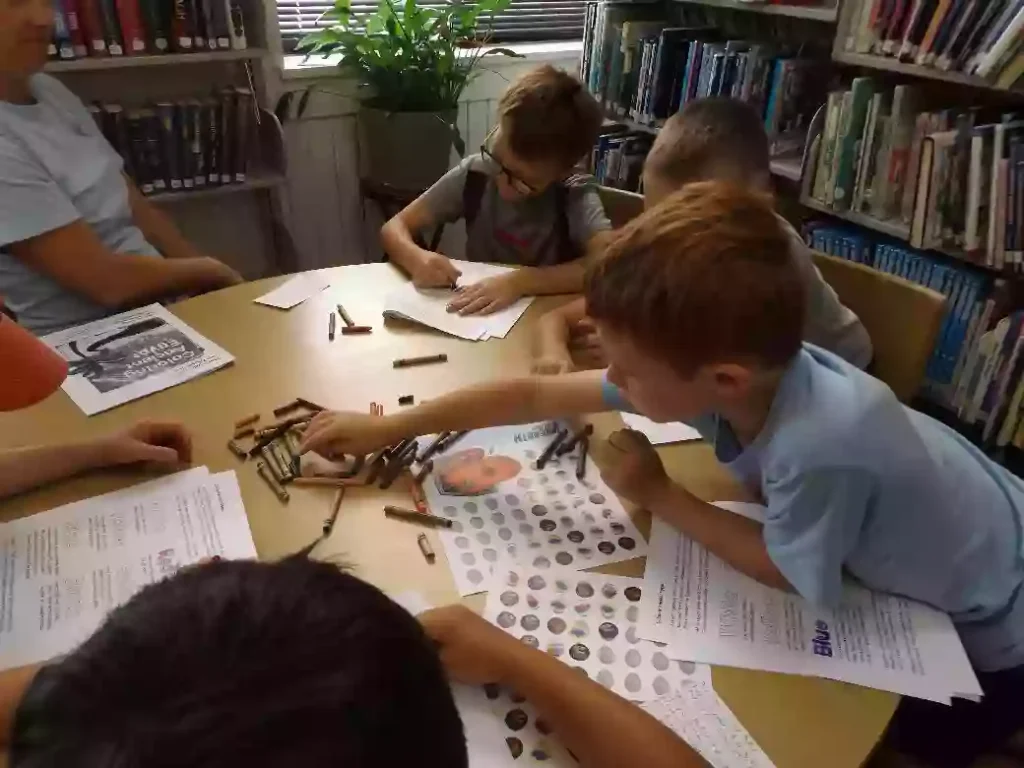
 Librarian Kathy Crosby led the engaging session, reading aloud from Ancient Egypt by Kathleen W. Deady. The program, part of the library’s popular summer reading initiative, invited kids to step back thousands of years and explore the wonders of the Nile River Valley through stories, facts, and hands-on learning. What began as a simple story time quickly blossomed into an immersive adventure that left participants wide-eyed with wonder.
The highlight of the reading centered on the legendary King Tutankhaten, better known as King Tut. Children learned that this famous pharaoh ascended to the throne at just nine years old and ruled for only nine years before his untimely death. His story captured the imagination of the young audience, particularly when Crosby described the 1922 discovery of his nearly intact tomb by British archaeologist Howard Carter.
“King Tut was buried with everything he might need in the afterlife,” Crosby explained to the group. The tomb, consisting of four small rooms, was packed with thousands of glittering gold items, intricate jewelry, furniture, and other treasures. At its heart lay a magnificent decorated gold coffin containing the young king’s mummy. The ancient Egyptians’ belief in life after death — and their practice of equipping the deceased with worldly possessions — sparked lively discussions among the children about what they might take with them to the next world.
Beyond the royal intrigue, the session illuminated the remarkable ingenuity of the ancient Egyptians. These early innovators excelled in mathematics, science, astronomy, and medicine. They constructed awe-inspiring architectural marvels, including the iconic pyramids and tall, slender obelisks — four-sided monuments that taper to a pyramid-shaped point at the top. Participants were fascinated to discover how these structures continue to influence modern design.
The program delved into daily life along the mighty Nile River. Before the development of agriculture, Egyptians hunted and gathered food along its banks. When water levels dropped, communities settled in the fertile valley, building permanent homes and learning to cultivate crops. They raised cattle, sheep, and goats while continuing to hunt and fish. The children were captivated by the sophisticated irrigation systems developed to harness the Nile’s annual flooding, which occurred predictably between June and September each year.
 Farming became a community effort involving men, women, and children alike. Seeds were planted in October following the floods, with harvests of wheat, barley, fruits, and vegetables taking place from March to May. The race against time to gather crops before the next flood cycle underscored the Egyptians’ deep connection to the rhythms of nature. “Everyone worked together,” Crosby emphasized, painting a vivid picture of cooperative ancient society.
One of the most intriguing topics was the invention of hieroglyphics — a complex system of picture-based writing used to record important events, laws, and knowledge. Not everyone could read or write these symbols; those who mastered them held prestigious positions as scribes. The kids were enchanted by the idea of communicating through pictures rather than letters, leading to spontaneous attempts to sketch their own “hieroglyphs” during the discussion.
The construction of the pyramids proved especially mesmerizing. Building even one pyramid could take up to 20 years, with workers cutting massive stone blocks from quarries using wooden wedges driven into cracks and then soaked with water to expand and split the rock. The enormous blocks were transported by barge down the Nile and then laboriously dragged up ramps into place. The precision involved was staggering: ancient Egyptians employed careful measurements, sometimes using barrels to gauge length or counting rolls for distance. Their early mathematical concepts, including methods that influenced today’s decimal system, laid foundational groundwork for human advancement in architecture and engineering.
 The session connected past and present by highlighting Egypt’s lasting legacy. Modern mathematics and Western architecture owe much to these ancient innovators. Their obelisk design, for instance, is echoed in landmarks like the Washington Monument in Washington, D.C. Through these connections, the children gained appreciation for how ancient civilizations continue to shape contemporary life.
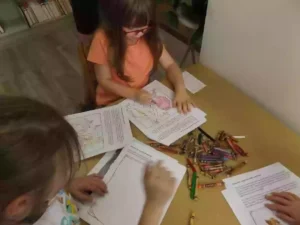
Following the reading, each participant received a Coloring Ancient Egypt activity book to take home. The books offered more than just coloring pages — they explored how Egyptians created vibrant pigments for their art and detailed artifacts discovered in various tombs. Many children left excitedly discussing which colors they would use first and what treasures they might “discover” in their own drawings.
The Henryetta Public Library’s summer reading program continues to provide these enriching experiences, encouraging literacy, curiosity, and cultural awareness among local youth. Crosby and the library staff invite families to return for more adventures as young participants “unearth” additional stories and knowledge in upcoming sessions.
 Programs like this play a vital role in small communities, fostering a love of learning during the summer months when students are away from formal classrooms. By bringing history to life through interactive storytelling, the library helps ensure that the next generation appreciates the rich tapestry of human achievement — from the banks of the Nile to the heart of Oklahoma.
Parents and educators alike praise the initiative for making complex historical topics accessible and exciting. One young attendee, eyes sparkling, summed up the day perfectly: the past isn’t so distant when you get to dig into it yourself.
As the children headed home with their books and newfound knowledge, the library buzzed with the energy of discovery. In Henryetta, the sands of Ancient Egypt may be far away, but for one memorable summer day, they felt remarkably close.
https://www.henryettalibrary.org/
https://henryetta.booksys.net/opac/henryettapl/index.html#menuHome