Millioners-exodus.jpg
Tax the Rich… Until They’re Gone? The High-Stakes Gamble in Blue States
Millionaire Exodus: Socialist Mayors Dismiss Wealthy Departures
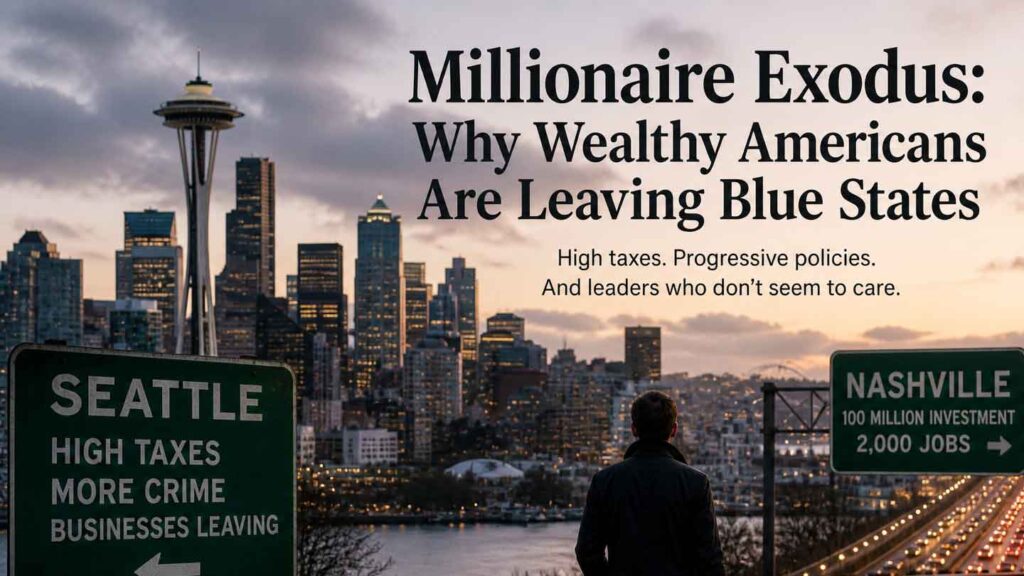
Blue states have been seeing a wealth exodus for years, but their leaders are still doubling down on taxes. Washington state is set to impose a 10% tax on millionaires, and Seattle socialist mayor Katie Wilson is looking at even more progressive proposals to separate residents from their money. Wilson is also sending a pretty clear message to the wealthy: don’t let the door hit you on the way out.
Wealth Flight and Political Dismissal
“I think the claims that millionaires are going to leave our state are like super overblown and if, you know, the ones that leave, like, bye.” That sentiment reflects a growing divide between policymakers and high-income residents. Just months after Wilson urged a boycott of Starbucks, the Seattle-based company began shifting operations south, pouring $100 million and creating 2,000 jobs in Nashville.
Critics argue that dismissing business concerns as trivial risks long-term economic consequences. “Whether you’re a billionaire or a business owner… it’s really not [a joke],” one commentator said, pointing to the broader implications of losing major employers. The relocation of Starbucks from downtown Seattle is described as “massive,” signaling potential ripple effects across the local economy.
Changing Urban Landscapes
Concerns extend beyond Seattle. Observers note similar patterns in other cities, where post-pandemic conditions have altered urban life. “Things have not been the same in this city since COVID… it hasn’t recovered and it only keeps progressively getting worse,” one speaker said, adding that many residents now seek to spend as little time in the city as possible.
Demographic shifts are also evident. Longtime residents appear increasingly dissatisfied, while newer populations may be more accepting of current conditions. “The old people definitely are not [happy]… because remember what it was like just a few years ago.”
Debate Over Decline or Rebuilding
A more dramatic perspective suggests that some cities may need to “fail fast” before they can recover. One argument proposes that allowing policies to collapse could accelerate reform: “You’re going to have to burn it down if you want to rebuild it back up.”
Others strongly disagree, warning that societal structures are fragile. “If it falls apart all the way, you don’t bring it back,” one voice countered, emphasizing the importance of preserving stability rather than risking total collapse.
This divide highlights a fundamental question facing major cities: whether gradual decline or abrupt disruption is more likely to produce meaningful change.
Leadership and Political Direction
Criticism is also directed at leadership styles and political alliances. Some argue that current leaders lack the experience needed to manage complex urban challenges, describing them as “lightweights” who “don’t know what they’re doing.”
At the same time, there is concern about broader political support for progressive policies. The backing of national figures is seen by some as a signal of the direction major parties are heading. “The party has just become extremely, extremely progressive,” one speaker said, questioning where moderates stand in response.
Business, Consumers, and the ‘Experience Economy’
The discussion also touched on corporate strategy, particularly Starbucks’ evolving brand positioning. CEO Brian Niccol emphasized the importance of delivering a “premium experience,” even when products come with higher price tags.
While some agree that customers value experience, others argue that rising prices risk alienating consumers. “It is surprising… a family of four, you’re going to spend close to forty bucks just for a cup of coffee,” one critic noted.
Supporters counter that spending often reflects personal priorities. “You could probably look at the way I spend some of my money… but I think it’s an experience,” another perspective added, illustrating how consumer behavior varies widely.
A Crossroads for Major Cities
As debates over taxation, governance, and economic policy intensify, major cities like Seattle and New York appear to be at a crossroads. Leaders continue to pursue progressive agendas, while critics warn of unintended consequences, including business departures and declining quality of life.
Whether these policies lead to renewal or further decline remains uncertain. What is clear, however, is that the tension between political vision and economic reality is shaping the future of America’s largest urban centers.
#MillionaireExodus #WealthFlight #BlueStatePolicies #UrbanDecline #TaxTheRich #EconomicDebate #SeattlePolitics #BusinessMigration #CityEconomy #ProgressivePolicies